Home › Blog › During › Feet & body
How do I prevent blisters on the Camino? Everybody has a cure. Find yours at home
And the one habit the skin doctors and the trail veterans share
No one can promise you a blister-free Camino, and no single trick works for every foot. The American Academy of Dermatology advises moisture-wicking socks (two pairs if one isn't enough), shoes that are neither tight nor loose, powder or petroleum jelly on trouble spots, a soft bandage over them, and stopping right away when something hurts or turns red. Try your own mix on long walks at home. Questions about a blister you already have go to a pharmacist or doctor.
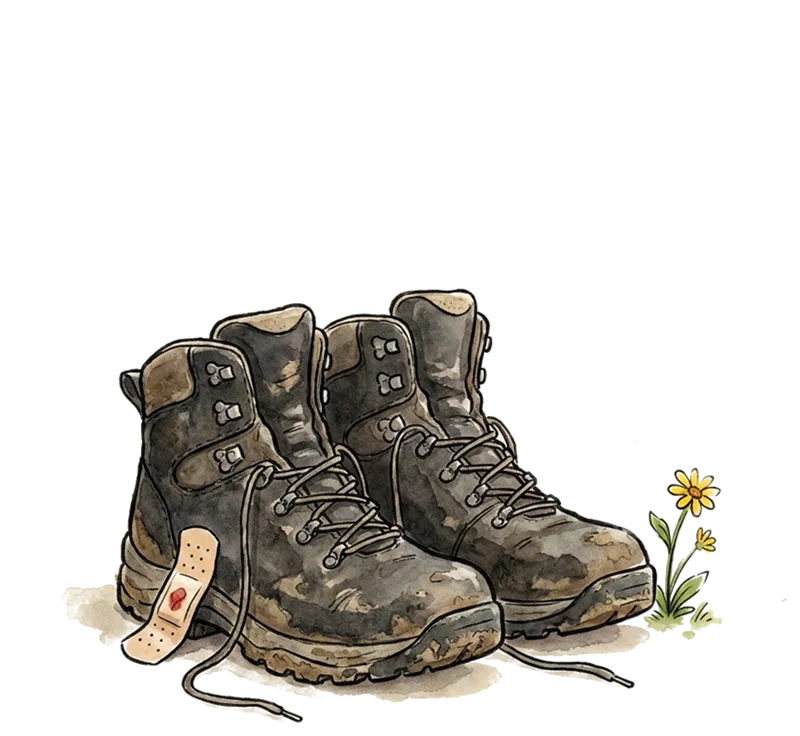
You're looking at your feet. The same feet that blistered in new sandals on one trip to the mall.
And I want to walk across Spain on these? My feet have always been trouble. Other women just have good feet.
So you do what everybody does. You search. Ten minutes later you have eleven cures and a headache.
Everybody has a cure
Petroleum jelly every morning. No, powder. Two pairs of socks. No, one pair, but with toes. Tape everything. Tape nothing. Each one comes with total confidence, from somebody who says they walked 500 miles without a single blister.
Who do I believe?
Each of them, about their own feet. That's the annoying part.
In August 2023, Camino veterans spent two days arguing about exactly this, in one long online thread. One of them, with four Caminos done, swore by petroleum jelly every morning. Another dropped it along the way and kept the thin liner socks, for hot days. Liners had several fans. A couple gave the credit to finding the right shoes and the right socks. And a podiatrist who joined the thread said what the thread itself was proving: what works for one pilgrim doesn't work for the next.
Feet are different. So nobody can hand you the cure. You have to go looking for yours, and the cheapest place to look is home.
What the skin doctors say
I don't want eleven opinions. I want somebody who knows to tell me what to do.
Fair. Here's the closest thing. The American Academy of Dermatology keeps it simple: blisters show up where skin rubs against skin or against what you're wearing. (Foot specialists still argue about what exactly happens under the skin. You don't have to settle that to look after your feet.) Their list for feet is short:
- Nylon or moisture-wicking socks. If one pair doesn't do it, try two.
- Shoes that are neither too tight nor too loose.
- Powder or petroleum jelly on the places that always give you trouble.
- Moleskin or another soft bandage over a problem spot, put on so it stays put.
- And if something hurts, bothers you or turns red: stop right away.
They also warn against cotton for the clothes you exercise in, because cotton soaks up sweat and holds it. Plenty of pilgrims say the same about socks.
That's the menu. Your job before Spain is to try combinations on long training walks and notice what your feet like.
Who has time to test six kinds of socks? You were going to take the training walks anyway. Now they have a second job.
You'll need things to try. The feet section of our Shelf is built that way: not one magic product, but a small stack to experiment with (a thin liner, a merino sock, a shoe with room, tape for before). See what buyers say about each one, the complaints included.
Where the arguing stops
Veterans on that thread described the same habit in their own words: the moment a spot feels warm, they stop and see to it. The dermatologists' list says it too: at the first discomfort, stop.
How would I even know? I've never felt one of those in my life.
You'll know. It isn't pain yet. It's a warm spot, like a coin left in the sun and slipped into your sock. Hikers call it a hot spot.
Two miles to the café
Mile six. You've fallen in with three other pilgrims, the talk is good, and the pace finally feels easy. And there it is. The warm coin, left heel.
It's only a little warm. The village is two miles on. I'll deal with it at the café. We just got a nice rhythm going. I don't want to be the one who makes everybody stop, fussing with her foot in front of strangers.
That thought is a blister's best friend. The shoes may have started it. Good manners finish the job.
Two miles is about forty minutes of the same rub on the same spot.
So be a little "rude." Say "I need five minutes," sit down on the first thing that will hold you, and cover the spot the way you practiced at home. Don't be surprised if somebody says, "Oh good, I need a minute too." And anyone who walks on, you'll catch at the café. Cafés are where the Camino waits for people.
Five minutes now. Or the same spot, louder, for the next two miles, and maybe for days.
The honest part
You can do everything right and still get one. No method is a guarantee.
If a blister shows up anyway, the dermatologists' rule is: don't pop it, because that can let an infection in. For what to put on it, ask a pharmacist; in Spain, look for the green cross. Redness, pus, swelling or pain that keeps growing are a reason to see a doctor.
This weekend
Your feet didn't blister at the mall because they're weak. They blistered because new sandals never asked them anything. And, to be fair, neither did you.
You have time to ask. Start this weekend: a long walk, your real socks, your real shoes. And the first warm spot gets five minutes of your full attention.
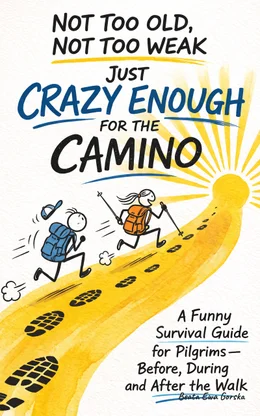 What to do for your feet every morning and every evening, legs up the wall included: that's Chapter 10 of the book. the book →
The Shelf: gear for the CaminoWhat buyers love, and what to know first. open the Shelf →
What to do for your feet every morning and every evening, legs up the wall included: that's Chapter 10 of the book. the book →
The Shelf: gear for the CaminoWhat buyers love, and what to know first. open the Shelf →